From early identification to lifelong inclusion.
SRC follows a life-cycle model of empowerment — meeting each person at their stage of development and walking alongside them through education, skill-building, employment, and community life. Five programs, three delivery channels, one goal.
The life-cycle model
Institution-Based Rehab.
Targeted groups come to the Centre for services and supports.
Home-Based Rehab.
Teams reach the beneficiary's home with need-based support.
Community-Based Rehab.
A bottom-up strategy within community development — owned by the community.
At a glance
| Program | Focus | Reach |
|---|---|---|
| Disha cum Vikaas Centre (SDVC) | Day-care & school-preparedness, ages 0–18 | 30 |
| Special School (SSS) | Day-care & residential special education | 100 |
| Vocational Training Centre (SVTC) | Skill development & sheltered employment | 31 |
| Home-Based Centre (SHBC) | Home-based education — 3 mandals, 9 villages | 25 |
| Community-Based Rehab. (SCBR) | Community outreach — 4 mandals, 51 villages | 110 |
| Total directly served | 296 | |
Plus 1,792 parents, siblings, professionals, volunteers & community members reached through these programs.
Early intervention & special education
Disha cum Vikaas Centre & Special School
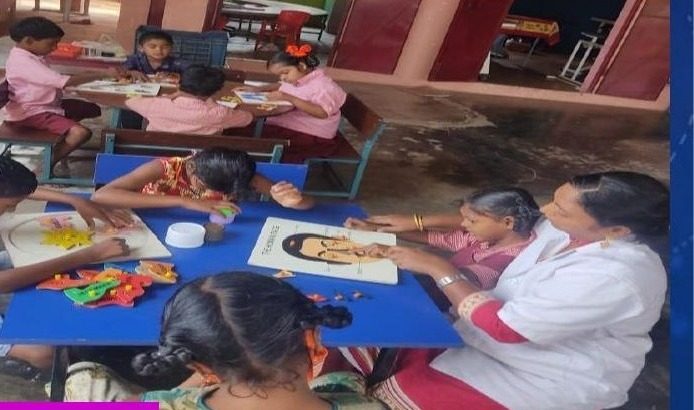
Combined day-care, school-preparedness and special-education services for 130 children (0–18 years) across both centres in 2025–26.
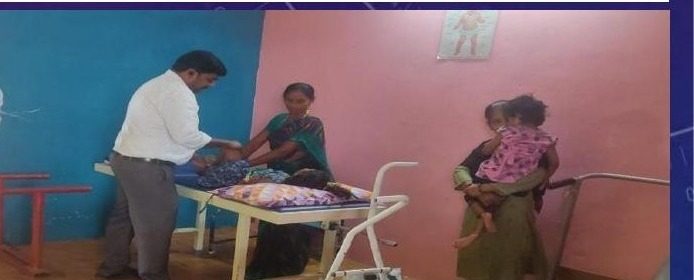
- Screening, assessment, categorisation, certification and Individual Education Plans (IEP) for every child.
- Early interventions: Activities of Daily Living, physiotherapy, speech & communication, behaviour modification, pre-academics.
- Special education with teaching-learning materials, pre-vocational activities, sports, cultural & recreational programs, and yoga.
- Active participation of parents and siblings in therapy and learning.
- Regular visits to banks, post offices, markets and public utilities for real-world independence building.
- Facilitation for aids & appliances, support devices, and government/private scheme benefits.
Vocational training & livelihoods
Sirisha Vocational Training Centre (SVTC)
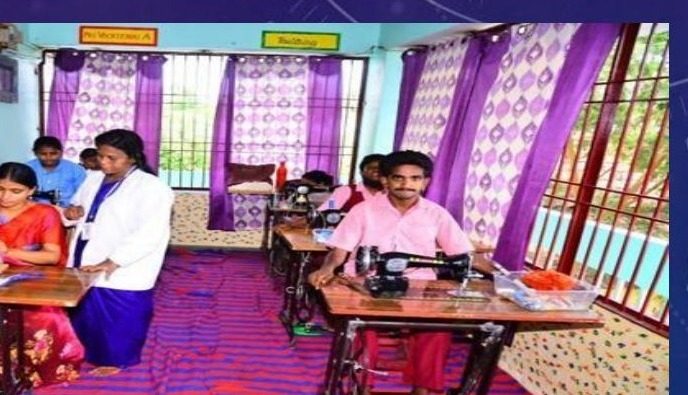
31 trainees in 2025–26 (13 male, 18 female), selected by trade interest and family circumstance.
- Trades include tailoring (traditional & fashion), soft-toy & greeting-card making, plate making, glass & pot painting, phenyl making, gardening, cooking and computers.
- Full pipeline: raw-material sourcing, machinery demos, task-analysis training plans, safe working environments, product-making, packing and labelling.
- Exhibition-cum-marketing (online & offline), networking for work orders, and orientation toward self-employment or Self-Help Groups (SHGs).
- Direct pathway to SRC's Sheltered / Protected Workshop for ongoing paid employment.
- Tailoring (traditional)
- Tailoring (fashion)
- Soft-toy making
- Greeting-card making
- Plate making
- Glass painting
- Pot painting
- Phenyl making
- Gardening
- Cooking
- Computers
Home & community-based rehabilitation
Home-Based Centre (SHBC)
25 children reached through home visits across 9 villages in 3 mandals — now in its 8th year (since 2018). Multidisciplinary teams deliver ADLs, behaviour modification, physiotherapy, academics and skill development directly at home.
Community-Based Rehabilitation (SCBR)
SRC's largest single program — 110 children & adults across 51 villages in 4 mandals. Regular medical camps, screening & certification drives, voter-enrolment and rights-awareness rallies. Close coordination with PHCs, ICDS (Anganwadi), local schools and Panchayati Raj bodies.
Veerankilock, Pamidimukkala Mandal
Head Office & Rehabilitation Centre
Vuyyuru, Krishna District
Second establishment and program delivery centre
51 villages, 4 mandals
Community-Based Rehabilitation outreach area
9 villages, 3 mandals
Home-Based Centre coverage area
Krishna, NTR & Guntur Districts
Primary service area of Andhra Pradesh